Team and supervision
The NanoBioMat research activity is built through the supervision of PhD students, postdoctoral researchers, engineers and master students working at the interface of magnetic nanoparticles, biomaterials and nanomedicine.
Permanent staff
Lénaïc Lartigue
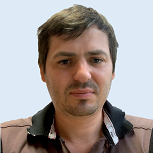
Position: Associate Professor in Chemistry
Role: Magnetic nanoassemblies, iron oxide nanoparticles and nanomedicine.
Jean-Michel Bouler
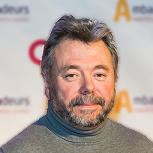
Position: Professor in Chemistry
Role: Biomaterials development and innovation processes.
Nathalie Guichard
Position: CNRS Technician
Role: Physicochemical characterization of magnetic nanoassemblies and biomaterials.
Current PhD students
Anna Hlukhaniuk
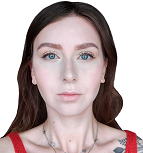
Period: 2023–2026
Project: Magnetic prooxidant-modified polysaccharide-based nanocomposites for multimodal cancer treatment.
Context: PhD in co-supervision with the Institute of Macromolecular Chemistry, Prague.
Léa Ponroy
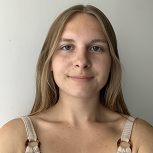
Period: 2024–2027
Project: Magnetic/photosensitizer nanoassemblies for cancer phototherapy.
Context: PhD project developed in collaboration with the Institut des Sciences Chimiques de Rennes.
Marie-Léa Lalanne

Period: 2024–2027
Project: Magnetic nanoparticles for targeted therapy of liver cancer.
Context: PhD project focused on magnetic nanomedicine for hepatic cancer.
Former PhD students
Joanna Boucard
Defense: 2018
Project: Magnetofluorescent nanomaterials for multimodal bioimaging and drug delivery.
Marina Coupeau
Defense: 2022
Project: Hybrid multicore magnetic nanoassemblies based on a curcumin 4-arylidene matrix for biomedical applications.
Postdoctoral researchers
Caroline Dessal
Period: 2020–2021
Project: Superferrimagnetic nanoassemblies of iron oxide nanorods for autoimmune hepatitis therapy.
Sarra Ben Hassine
Period: 2022–2023
Project: Coupling of magnetic nanoparticles in nanometric 3D arrays for magnetic fluid hyperthermia.
Research environment
The activity relies on a network of national and international collaborations combining expertise in synthesis, magnetic characterization, polymer chemistry, cell biology, advanced 3D biological models and in vivo studies.